Engineered on the machine it was built to save.
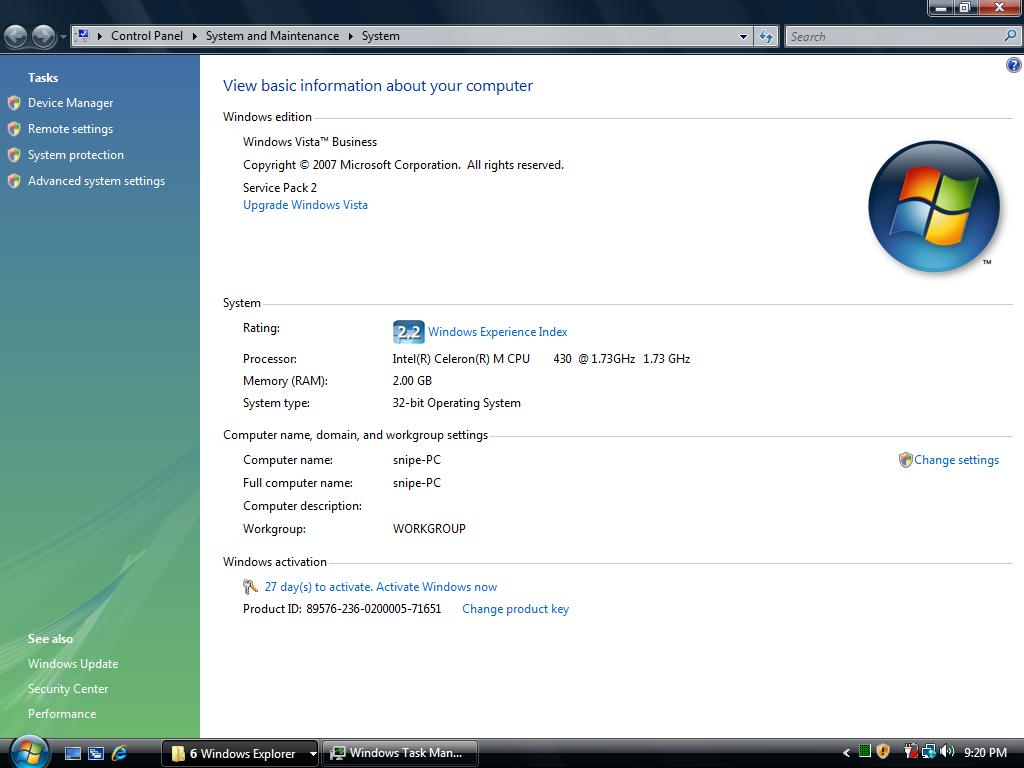
At Snipe, we believe the only way to build a browser that truly works on vintage hardware is to test it on vintage hardware. While the heavy lifting of compiling millions of lines of modern Chromium code was offloaded to a 32-thread Xeon server—since compiling natively on a legacy single-core CPU would take days—the actual direction of the build was entirely dictated by an authentic 2006 Intel Celeron M system running Windows Vista. Instead of relying on guesswork or modern emulators, we ran the test builds directly on bare metal using a custom command-line script. This setup launched each iteration with different experimental switches, systematically logging performance metrics, crash dumps, and resource usage directly into detailed breadcrumb logs.
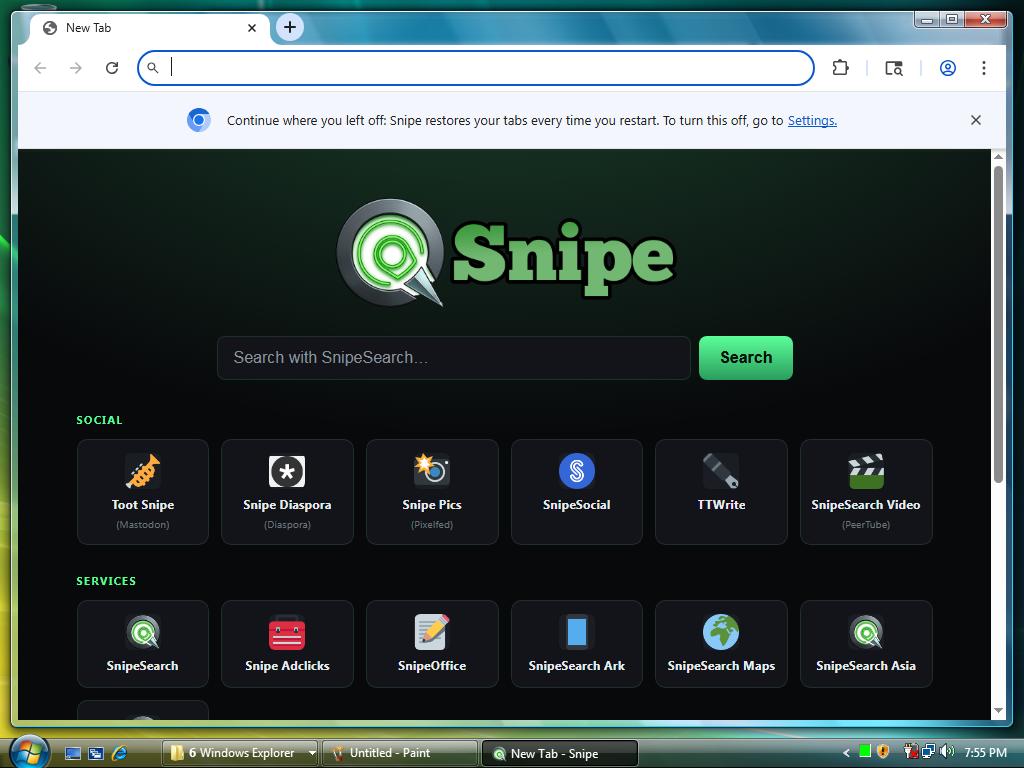
That real-time telemetry from the Celeron formed the blueprint for every optimization in the browser. We took those breadcrumb logs and configuration tweaks back to the Xeon workstation to compile targeted updates, transferred the new builds back to the Celeron, and ran the test suite again. We repeated this feedback loop until the browser achieved complete stability, minimal memory consumption, and smooth performance on actual 20-year-old hardware. By engineering Snipe on the exact machine it was built to save—rather than relying on high-end desktop theory—we delivered a browser fine-tuned for the real-world constraints of legacy Vista systems.